By Mike Amaranthus and James M. Trappe
Introduction
Mushroom hunters are accustomed to keeping their heads down, looking for choice edible fungal prizes. Certainly, harvesting wild edible mushrooms can be a joyous and life-long endeavor. But sadly, only about 10% of earth's several million fungal species produce mushrooms.
The majority not producing mushrooms, however, provide vital ecosystem functions. No fungal group is more important than the arbuscular mycorrhizal fungi. These tiny species are critical to life on earth. The term "arbuscular" is from Latin for "little bushes" referring to the microscopic fungal structures formed in host root cells in the shape of tiny bushes.
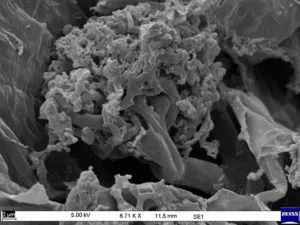
Arbuscular mycorrhizal fungi form a symbiotic relationship with most of our important crops as well as wild plants. Most grasses, wildflowers, agricultural plants, and woody plants form arbuscular mycorrhizae. These host plants produce photosynthates to fuel the activities of arbuscular fungi colonizing their roots. The fungi, in return, pull nutrients and water from the soil for use by the host plants. Miles of arbuscular fungal filaments can be present in a tablespoon of healthy soil.
The Dawn of Symbiosis
This salubrious phrase, coined by Bidartondo et al. (2011), refers to their insightful hypothesis on the early evolution of plant-fungus symbiosis. That term as translated from Greek literally means "living together" in English. Most, perhaps all, organisms rely on symbiosis with other organisms of one kind or another.
Halbwachs (2020) presents the evidence that spores of arbuscular mycorrhizal fungi (Glomeromycotina) and the earliest plant symbioses appear in the fossil record some 485 million years ago. The arbuscular mycorrhizal relationship turns out to be the most common form of root-and-fungus symbiosis and exemplifies an immensely successful product of evolution.
We Have a Problem
Agriculture spread dramatically some 12,000 years ago, and human-caused land clearings and crop tillage released substantial amounts of carbon dioxide into the atmosphere. More recently, since about 1750, with the rapid increase in the burning of fossil fuels and the 1900s industrialization of agriculture, carbon dioxide emissions have increased dramatically.
In the last 50 years atmospheric carbon dioxide levels have risen from 320 ppm to 415 ppm. The effects on climate change are indisputable. Added CO2 has contributed to hotter and extreme changes in weather that are reducing crop production and making livestock more susceptible to disease. Acidification of the world's oceans is threatening marine life.
What If?
Carbon in the soil when released in the air combines with oxygen to become CO2, the greenhouse gas that contributes greatly to global warming. Common agricultural practices like plowing and tilling mix oxygen with soil carbon. How to best capture CO2 from the atmosphere? A good natural process is to enhance incorporating carbon into the soil via arbuscular mycorrhizal fungi on millions of acres of farmland.
Research indicates that current agricultural practices release 25 to 35% of all carbon dioxide into the atmosphere, more than all types of transportation combined. But "what if" we could change farming from a destructive force to a regenerative force?
The knowledge and know-how for regenerative farming exist today. Minimal or no tillage, fewer chemical fertilizers and pesticides, cover cropping, and the addition of organic amendments are ways to increase soil carbon content. When managed appropriately on millions of acres of farmland, this approach can make a real difference in CO2 levels. Increasing the carbon content of the world's soils by just a few parts per thousand (0.4%) each year would remove an amount of CO2 equivalent to the fossil-fuel emissions of the European Union.
Key Players: Glomalin
Arbuscular mycorrhizae are the dominant mycorrhizal association on planet earth. They have been observed in the roots of more than 1,000 genera of plants. It has been estimated that more than 80 to 90 percent of the world's vascular plant species form arbuscular mycorrhizae.
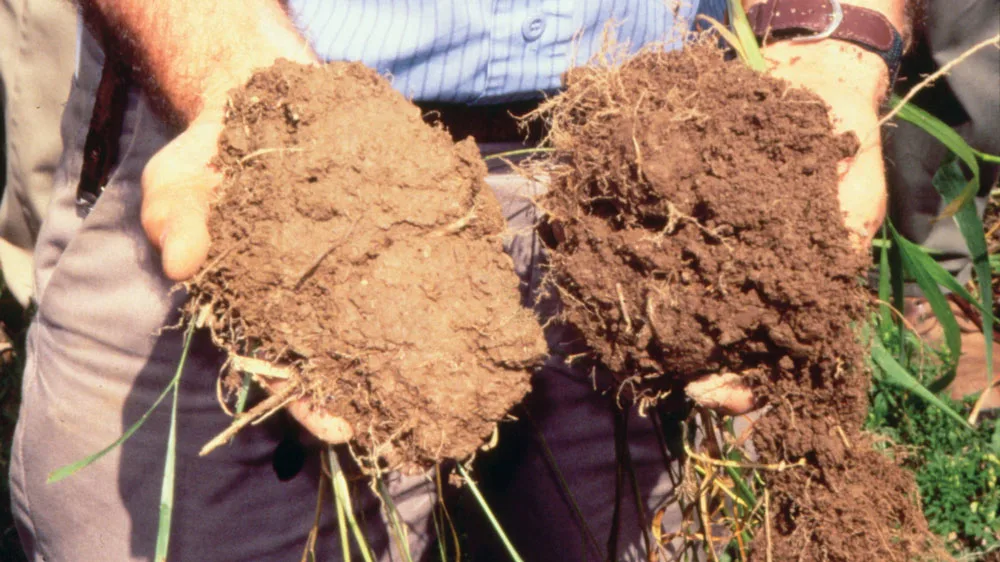
Glomalin may be the most important soil component you have never heard of. Arbuscular mycorrhizal fungi play a key role in the carbon cycle by absorbing carbon that plant leaves fix in photosynthesis from the atmosphere. Glomalin acts as a sticky organic glue that creates soil structure -- think of it as the material that holds the soil architecture together, allowing air, water, and roots to easily move through it. As much as 30 to 40 percent of the glomalin molecule is carbon. Glomalin may account for as much as one-third of the world's soil carbon.
Squashing the Symbiosis
Unfortunately, many conventional agricultural practices reduce or eliminate mycorrhizal activity in the soil and release carbon dioxide into the atmosphere. Certain pesticides, chemical fertilizers, intensive cultivation, compaction, organic matter loss and erosion all adversely affect beneficial mycorrhizal fungi. An extensive body of laboratory and field-testing indicates that the majority of intensively managed agricultural lands lack adequate populations of mycorrhizal fungi.
What We Know
Soils farmed with organic systems have greater populations of mycorrhizal fungi. Healthy populations of mycorrhizal fungi are associated with higher levels of glomalin production and increased carbon levels on farms.
Many of today's farming practices can combine methods that increase carbon content in the soil. Instead of relying on synthetic pesticides and fertilizers, regenerative farming entails symbiotic and soil carbon-building practices such as growing legumes with associated nitrogen-fixing bacteria, cover crops, diversified crop rotations colonized with mycorrhizal fungi, and animal manures and compost.
Conclusions
For decades after World War II, massive inputs of fossil fuels, intensive tillage, chemical fertilizers and pesticides helped increase crop productivity at the expense of topsoil erosion, organic matter loss, destruction of mycorrhizal fungi, and loss of precious soil carbon. Where can we put carbon dangerously accumulating in the air? There is one practical and cost-effective approach: put it back where it belongs, in the soil.
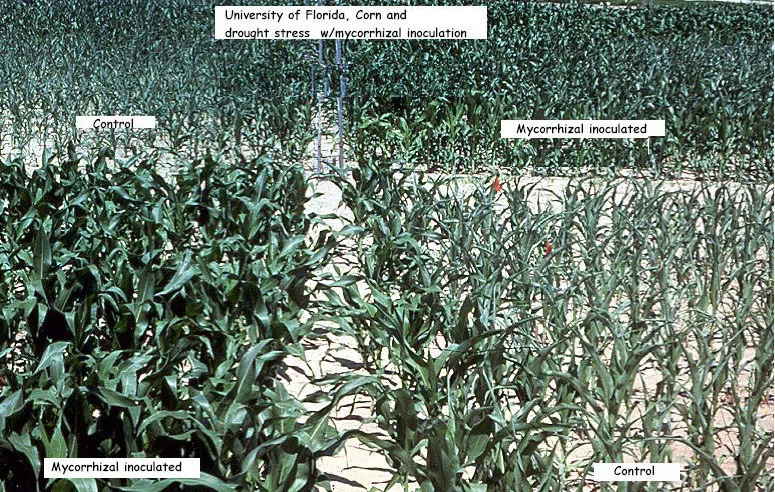
Their effectiveness in sequestering carbon in the soil and reducing carbon emissions into the air cannot be overlooked. Considering mycorrhizal fungi also can significantly increase food production with less fossil fuel inputs makes their use a no-brainer. The fungal game changer is hidden right beneath our feet.
Michael P. Amaranthus is a retired research soil scientist for the USDA and former associate adjunct professor at Oregon State University. He was the recipient of the USDA Highest Honors award for scientific achievement and has several mushrooms and truffles named in his honor. He is president of Myco Analytics LLC in Grants Pass, Oregon.
James M. Trappe is currently Professor, Forest Ecosystems and Botany-Plant Pathology at Oregon State University. With over 500 mycorrhizal scientific publications dating back since 1960, James continues his research activity today.